Every Child Is Born Ready to Learn
Spend a few minutes with a child and you’ll notice that they don’t need to be told to ask questions.
“Why does the moon follow us?”
“Why do leaves change colour?”
Their world is full of questions and every day feels like a new world to explore
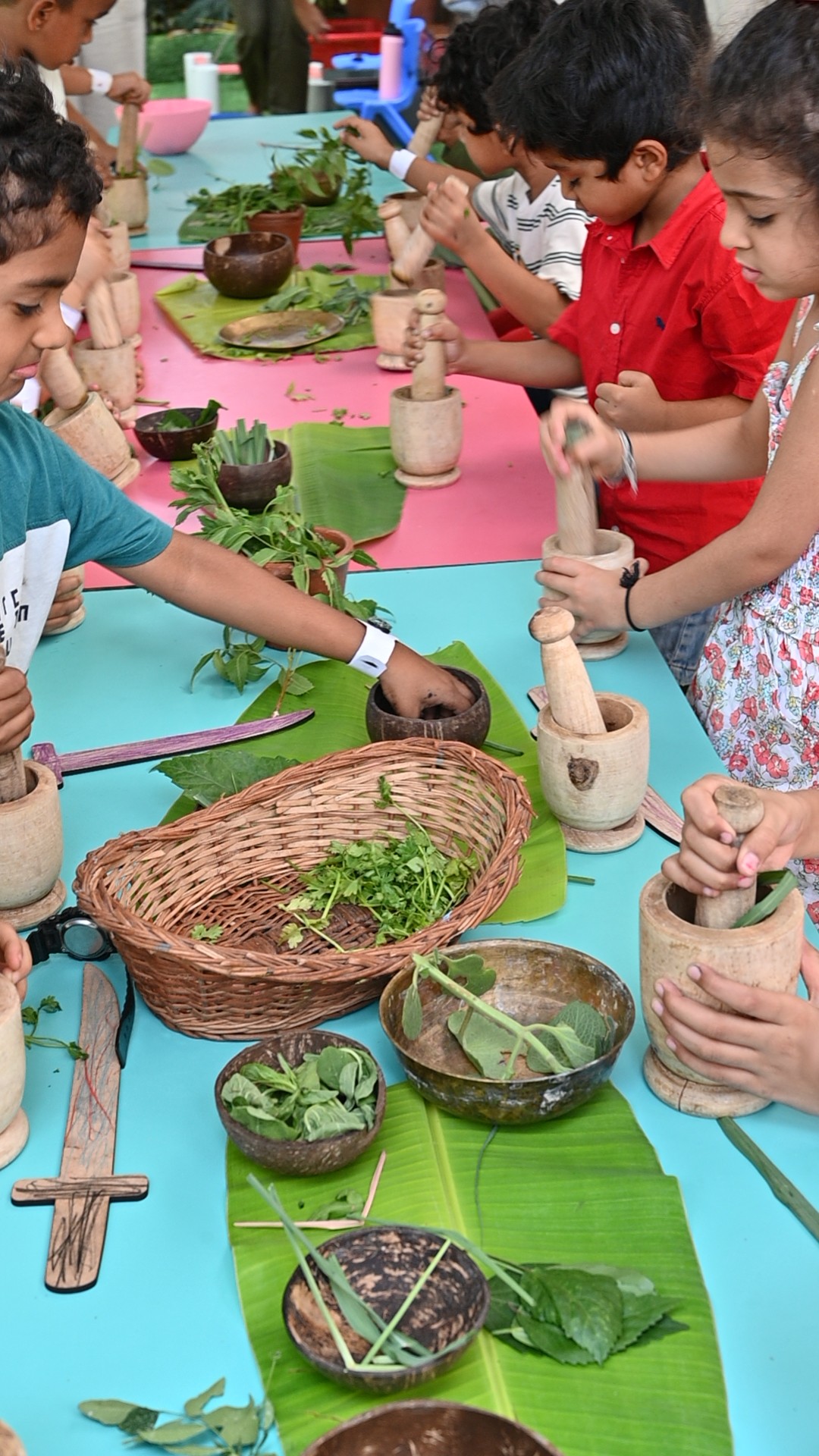
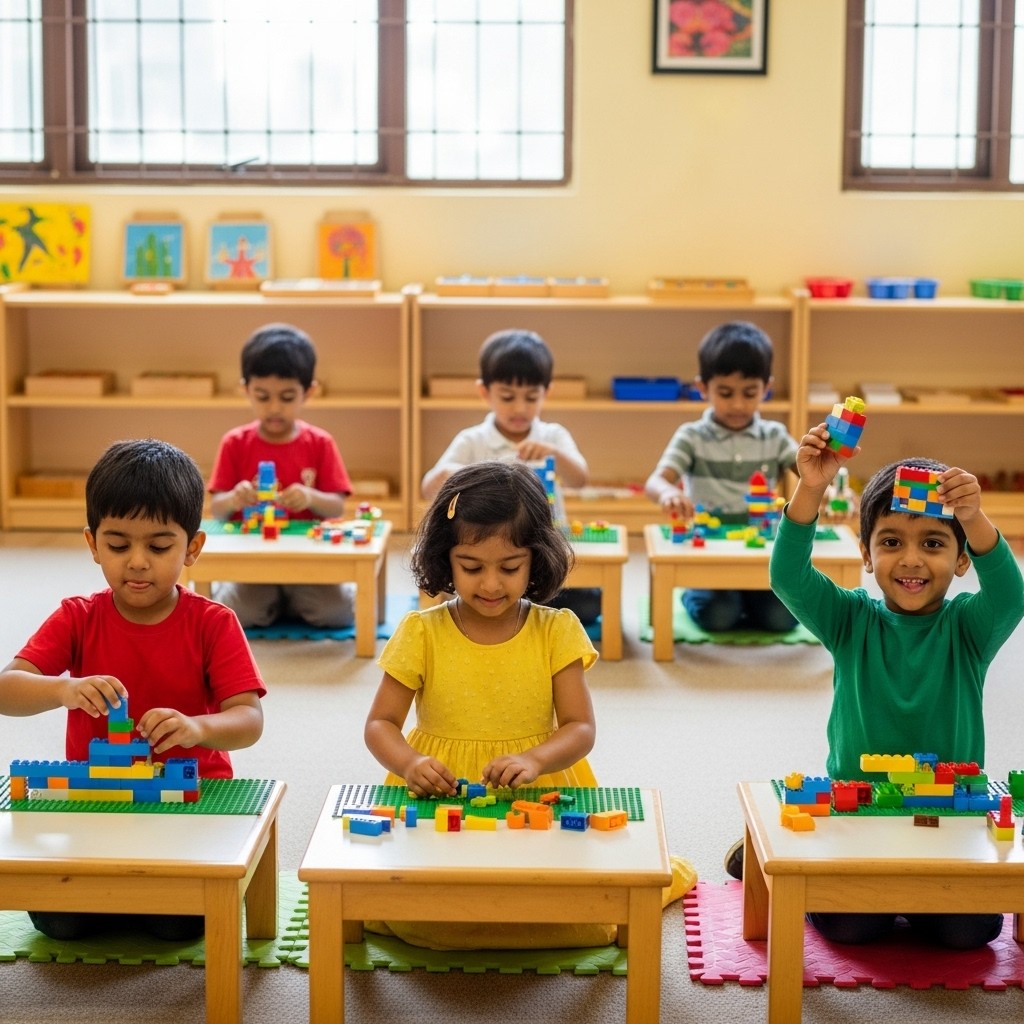
Learning for children is instinctive. It happens while building towers with blocks, watching insects in the garden, helping in the kitchen or finding out why one paper plane flies far away than the other. Before they step into a classroom, they are already learning by doing.
As they grow older, learning can a lot of times become centred around completing chapters, preparing for tests and finding the right answer. These things have their place. Strong learning foundations are important.
But education becomes far more meaningful when children don’t just learn about the world, they learn from it.
And that’s why at Anandi School, we chose learning through experiences. .
What Is Experiential Learning?
Experiential learning is exactly what it sounds like:
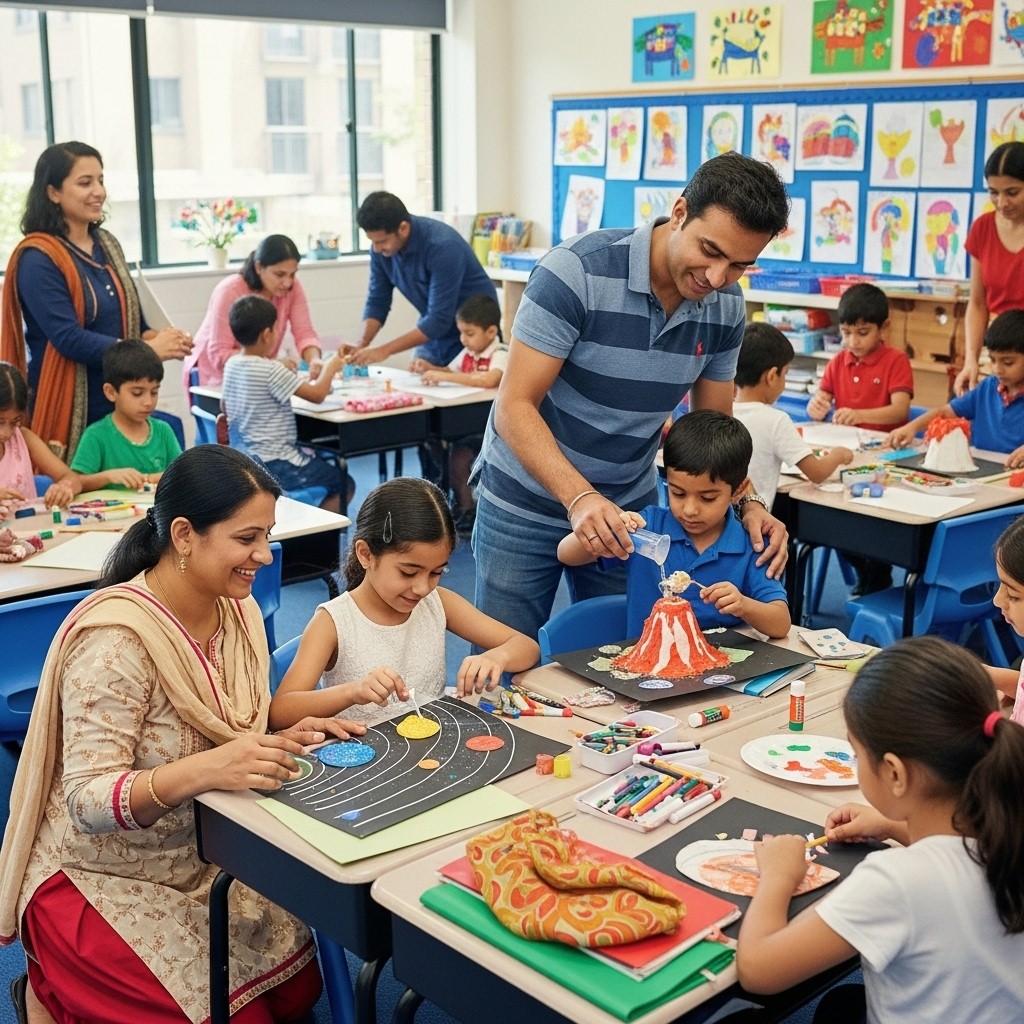
Children learn through real-life experiences along with theoretical knowledge.
Instead of only reading about a concept, they explore it. They observe it, question it, test it, discuss it and reflect on it.
Think about learning to ride a bicycle. Someone can explain balance to you. They can tell you where to place your feet and how to hold the handlebars. But the real learning begins only when you get on the bicycle.
You tremble.
You lose balance.
You try again.
And eventually, you are riding a bike!
The lesson stays with you, not because somebody explained it well but because you experienced it first hand.
Many of life’s most important lessons are learnt this way. Education should make room for those experiences too.
Why Does Experiential Learning Matter Today More Than Ever?
The world our children are growing up in today is changing rapidly. Many of the careers they will choose twenty years from now don’t even exist today. New technologies continue to change the way people work, communicate and solve problems, making preparing students for a global future more important than ever.
Schools cannot prepare children for every situation they will face. What they can do is help children become quick and adaptable learners.
Children who develop critical thinking skills by learning how to ask thoughtful questions.
Children who are comfortable working with others.
Children who are willing to try, fail, learn and begin again.
These qualities don’t replace academic learning. They make academic learning useful.
Knowledge is important but knowing how to use it is equally important too.

The Skills That Grow Through Experience
Experiential learning is often associated with projects and activities. But what children take away goes far beyond the activity itself.
They Learn to Solve Problems
There is no answer key at the back of a textbook for life.
In some cases, projects stall, experiments fail, or plans fall apart. When that happens, children learn to ask, “Well, what else can we try?” instead of looking for a “right” answer.
The ability to shift their mindset from following a script to exploring different possibilities helps children develop creative thinking skills and become more confident problem-solvers.
They Learn to Work With Others
Let’s be honest: working with others isn’t always a walk in the park. Everyone has their own ideas and naturally, people clash.
There are times when you have to meet in the middle and other times when you realize someone else’s suggestion is actually better than yours. These real-world experiences strengthen collaboration and social-emotional learning in a way no textbook ever can.
They Learn to Communicate Clearly
Whether children are presenting a project, explaining an idea or sharing an observation, they learn to organise their thoughts and express them with confidence.
The more opportunities they are given to present their opinion, the more comfortable they get doing it.
They Learn That Mistakes Are a Part of Learning
Children often remember the projects that didn’t work the first time. Not because they failed, but because the lesson from it stayed with them.
We believe in making mistakes to stop feeling like something to avoid. Instead, they should be a part of the learning process.
How Experiential Learning Comes Alive at Anandi School
At Anandi School we do not see experiential learning as an occasional activity but rather as an integral part of daily learning. This is brought to life in part through the school’s unique 4+1 Field Model.
How the 4+1 Field Model Works
The 4+1 Field Model is built around a simple idea. Learning becomes more meaningful when children have the opportunity to apply what they study.
For four days each week, students build strong academic foundations through the International Curriculum. This approach to International Curriculum learning in Bangalore encourages students to explore concepts, discuss ideas and develop a clear understanding of each subject.
The fifth day takes that learning into a different setting.
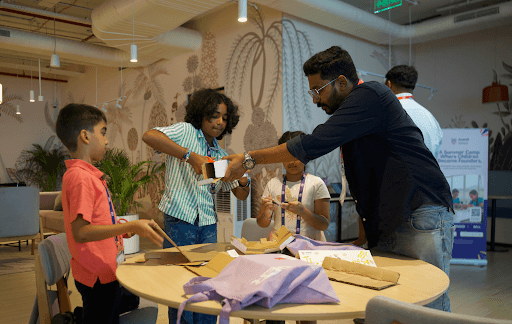
Instead of remaining inside the classroom, students work on projects that unfold over several weeks. Some explore engineering challenges. Others focus on sustainability, design or public policy. Each project asks students to use what they already know while discovering what they still need to learn. This applied approach also connects naturally with learning across Anandi’s Primary Years Programme and Middle Years Programme.

Learning From People Who Build, Design and Create
Some lessons are best understood by meeting the people who work with them every day.
Through the Field Model, students spend time with scientists, engineers, architects, designers and entrepreneurs. These conversations give them a chance to see how ideas move beyond textbooks and become part of everyday work.
A discussion on environmental science may continue at a waste management facility or while studying a local ecosystem. Concepts that once existed on a page begin to make sense when students see them in practice.
The same happens with physics and mathematics. Designing and testing a prototype often teaches far more than solving a set of equations. Every improvement asks a new question. Every setback encourages a different approach.
Design projects follow a similar path. Students speak with people, understand their needs, test possible solutions and present their ideas to mentors. Along the way, they discover that good design begins with careful observation rather than quick answers.
Reflection Turns Experience Into Learning
Completing a project is only one part of the process. The next step is just as important.
Students look back at what happened and ask a few simple questions.
What worked well?
What proved more difficult than expected?
Why didn’t the first solution succeed?
What would we change if we started again?These conversations help students think more carefully about their own learning. Instead of moving straight to the next project, they pause, reflect and identify what they would do differently.
Over time, this becomes second nature. Students learn to evaluate their own work, accept feedback with confidence and approach new challenges with a clearer understanding of how they learn best.

Preparing Children for Life Beyond School
Every parent hopes their child does well in school. Good grades open doors, build confidence and reward consistent effort.
But when parents think back to their own childhood, they often remember something else:
The teacher who encouraged them.
The project they couldn’t stop talking about.
The competition that pushed them outside their comfort zone.
The day they realised they were capable of more than they thought.
Those moments stay with us because they shape who we become.
Schools have the opportunity to create more moments like these. Moments that help children discover not just what they know, but what they can do when they step out into the real world.
For families exploring an education that combines International Curriculum academics with experiential and real-world learning, learn more about Anandi School admissions and the learning journey offered to students.