AI is already becoming part of everyday learning for children, often without parents fully realising it. Some changes are helpful, others raise important questions, and understanding both can help you make better decisions for your child.
Feb 20, 2026
AI in Schools: Opportunity or Risk?
Schools have always used multiple ways to help students learn, including textbooks, classroom teaching, discussions, and practical work. Now, Artificial Intelligence has become part of that environment. Students are using it to revisit topics they found difficult in class, get extra questions to practice, or understand a concept in a different way.
However, AI can also do something textbooks and practice exercises never could. It can generate full answers. This is where schools need to be careful. Children must not focus on just finishing assignments, for the sake of it. They must actually understand the topic.
AI in education can help schools along the way, but the thinking, problem-solving, and learning still need to come from the student.
Read this blog to learn more about how AI supports education without reducing the student’s role in the learning process.
Understanding AI in Education
Most discussions about artificial intelligence used in education focus on whether students should use tools like ChatGPT. That is only a small part of the picture. The application of AI in education is already present in how schools assign practice levels, track performance trends, recommend interventions, and manage academic systems.
Many schools are using AI without fully examining where it is involved and what decisions it influences. Before evaluating its benefits or risks, it is necessary to clearly understand what artificial intelligence used in education actually includes and how it affects everyday learning.

What is Artificial Intelligence in Education?
When people hear artificial intelligence used in education, they often imagine a student typing a question into a chatbot. Classrooms, however, encounter AI in quieter and more structural ways long before that moment. The application of AI in education is already shaping how students practice, receive feedback, and move forward.
It is commonly used through:
Adaptive platforms that change difficulty based on student performance
Intelligent tutoring systems that explain concepts in different ways
Administrative AI tracking attendance and performance patterns
Generative and agentic AI assisting with research, writing, and planning
AI is beginning to sit inside the learning process itself.
Current Adoption Rate of AI in Schools
Artificial intelligence used in education is not arriving suddenly. It has been entering in parts, often without being labeled clearly. In India, CBSE introduced AI as an elective, and newer curriculum frameworks now expect early years exposure. At the same time, students themselves have already begun using AI independently.
The application of AI in education currently exists as:
School-approved adaptive learning systems
AI tools supporting projects and simulations
Administrative analytics used by institutions
Unofficial student use outside of school oversight
Many schools, including some of the best international curriculum board schools in bangalore, are only beginning to formally introduce what students have already started exploring on their own.
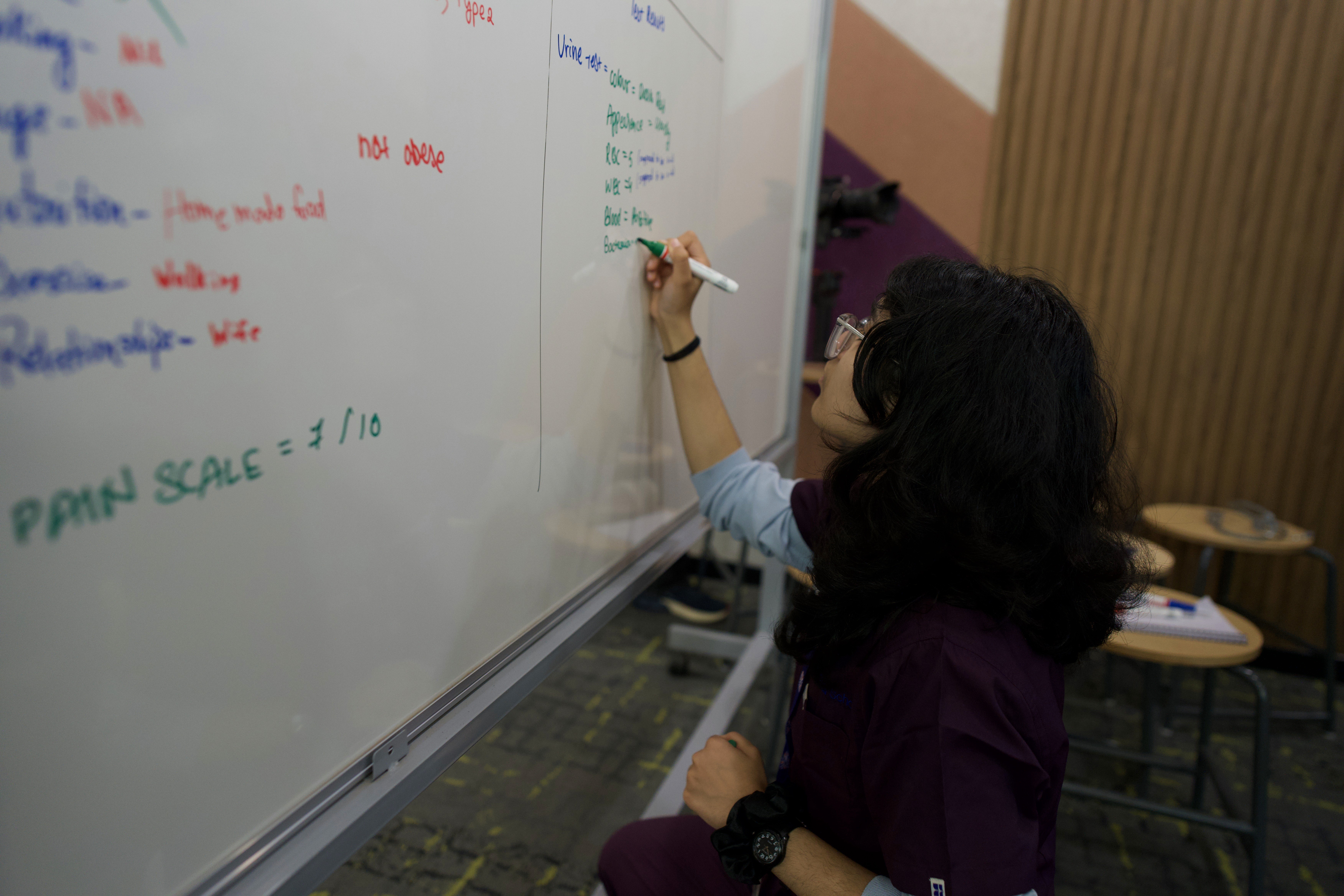
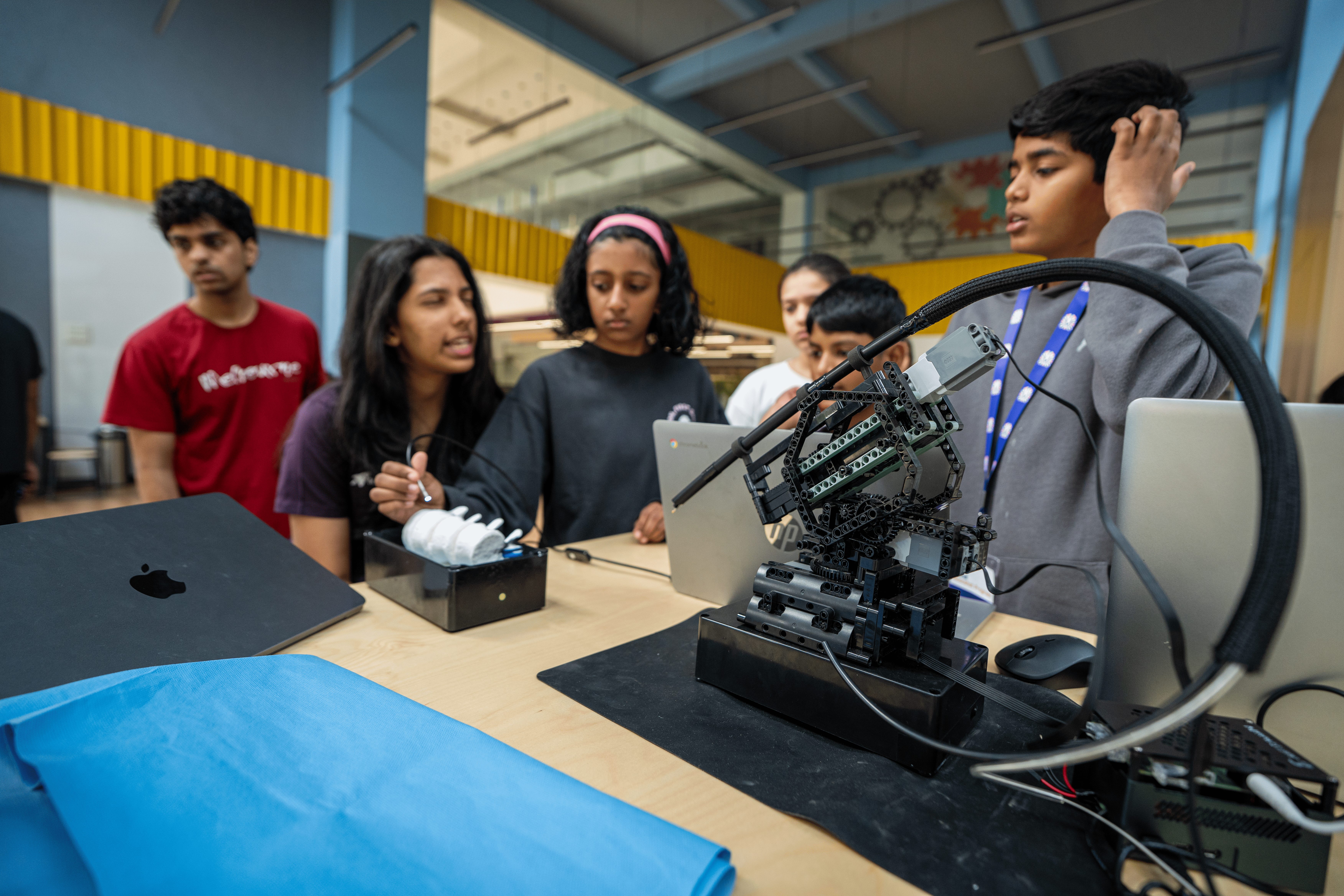
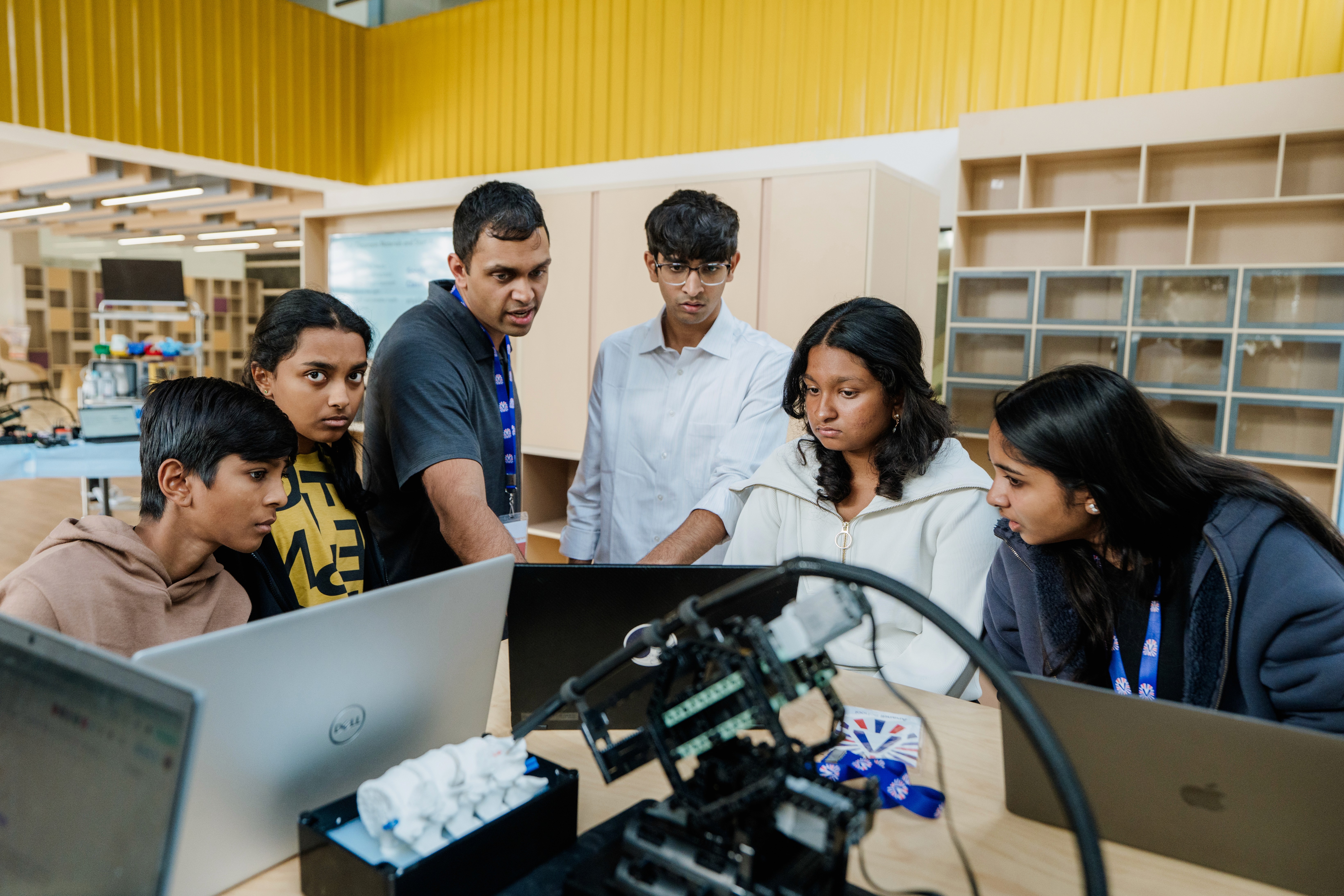
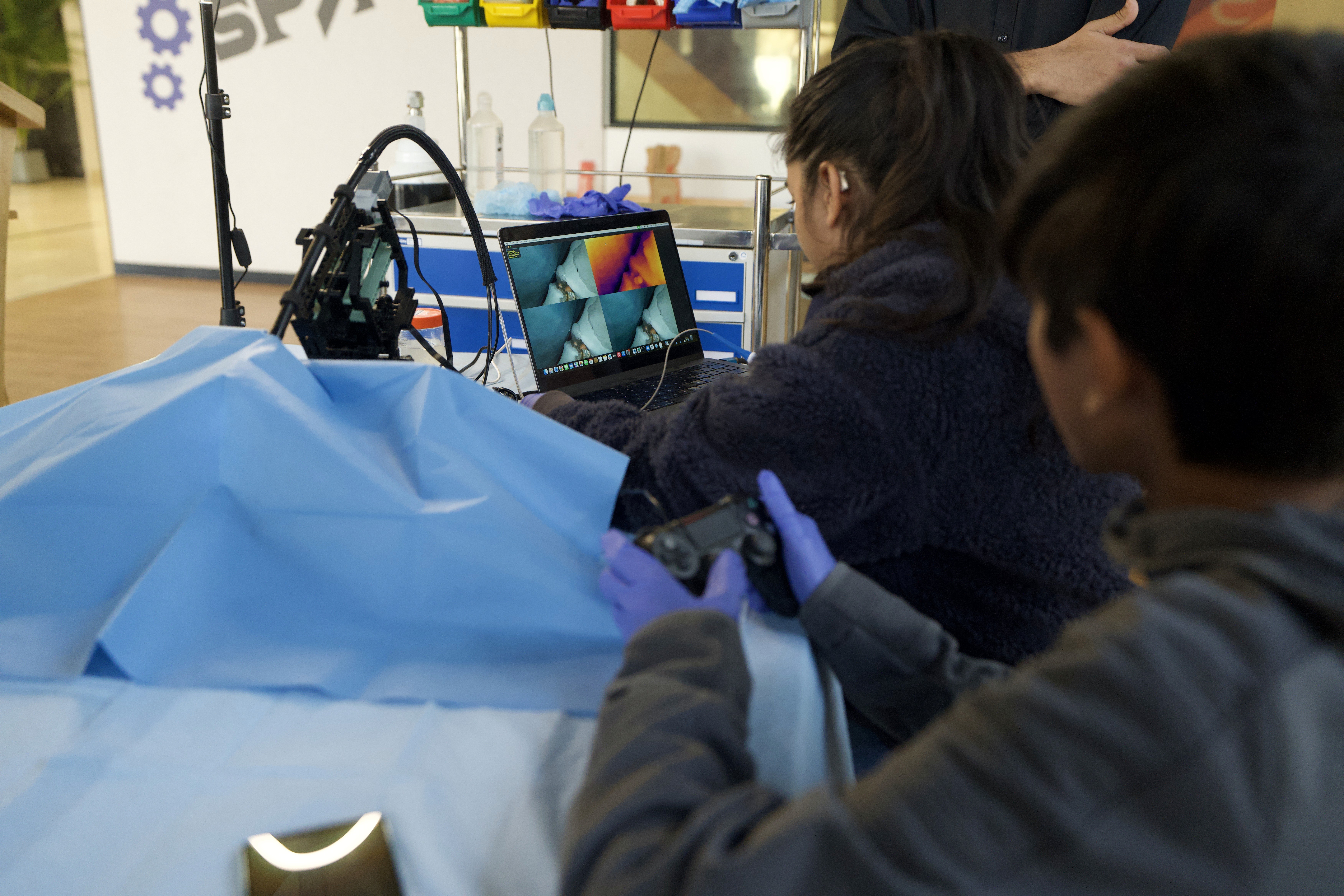
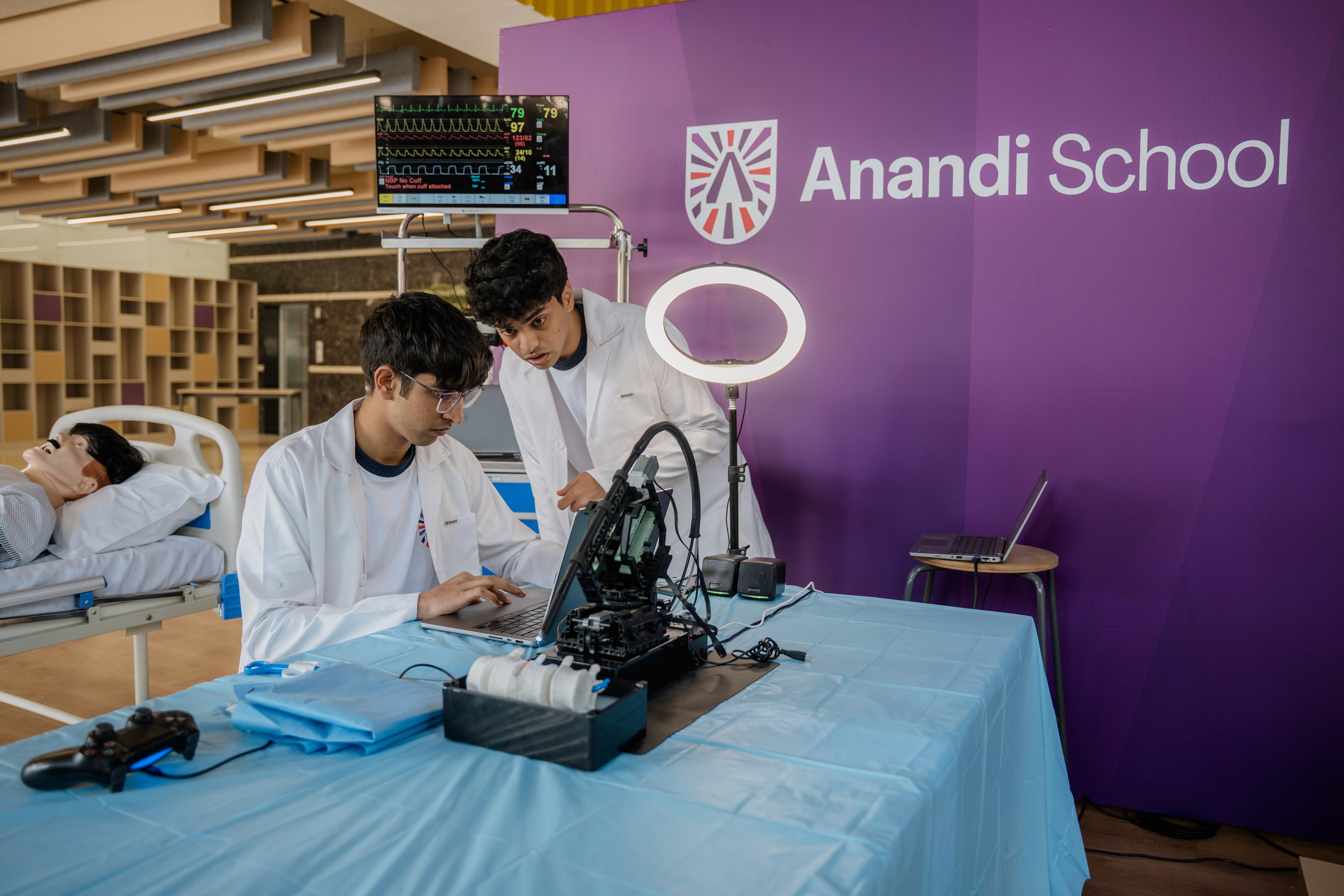
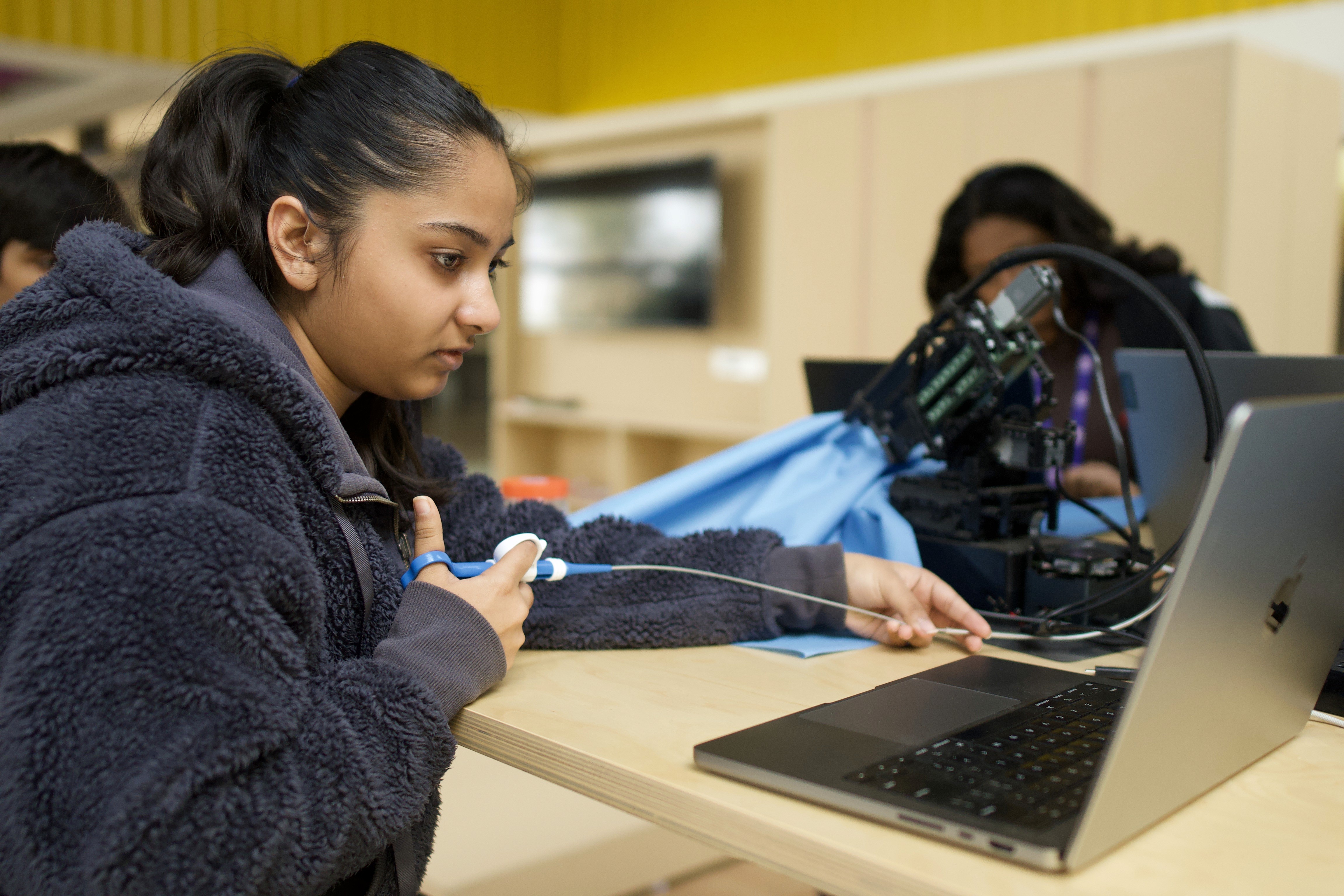
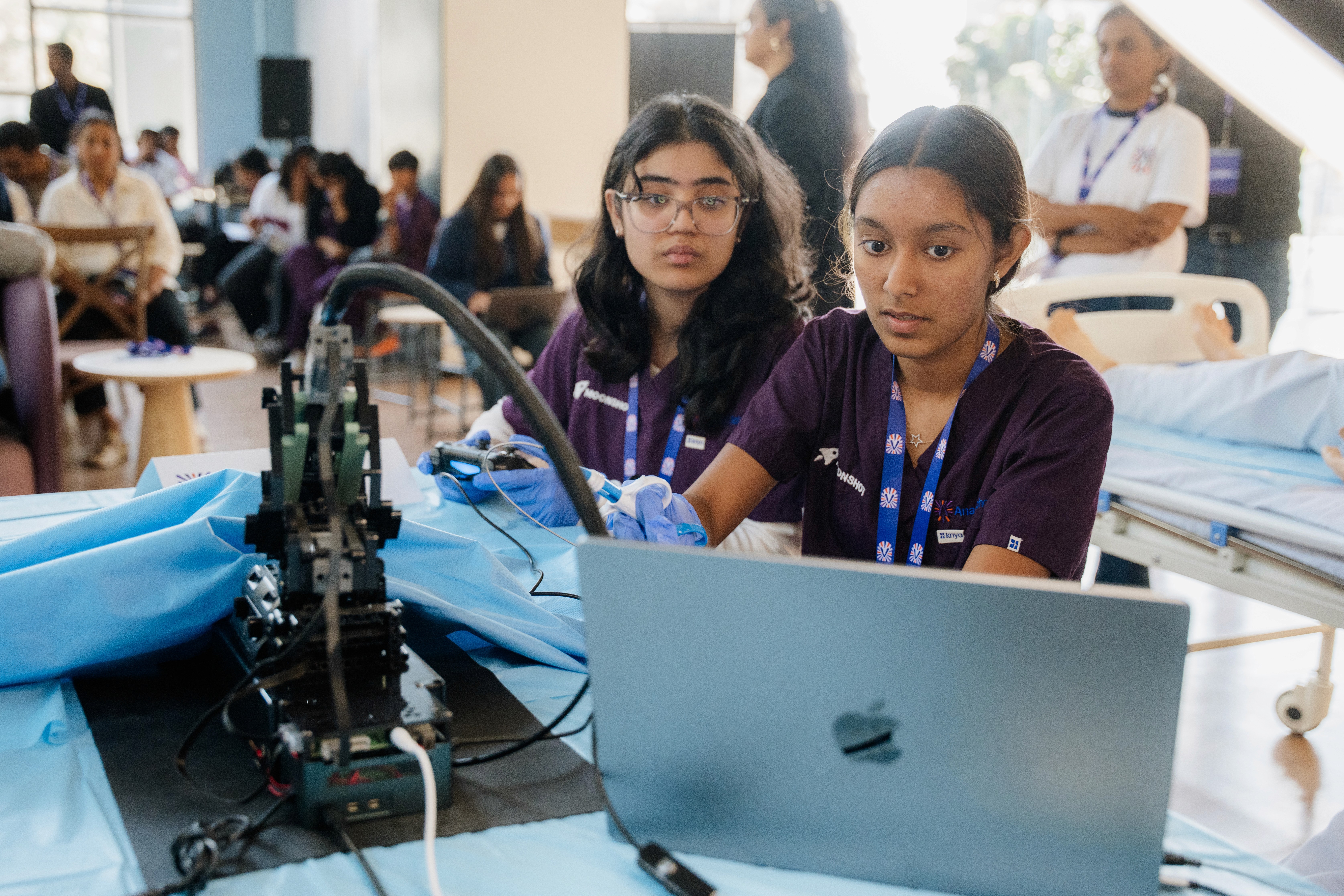
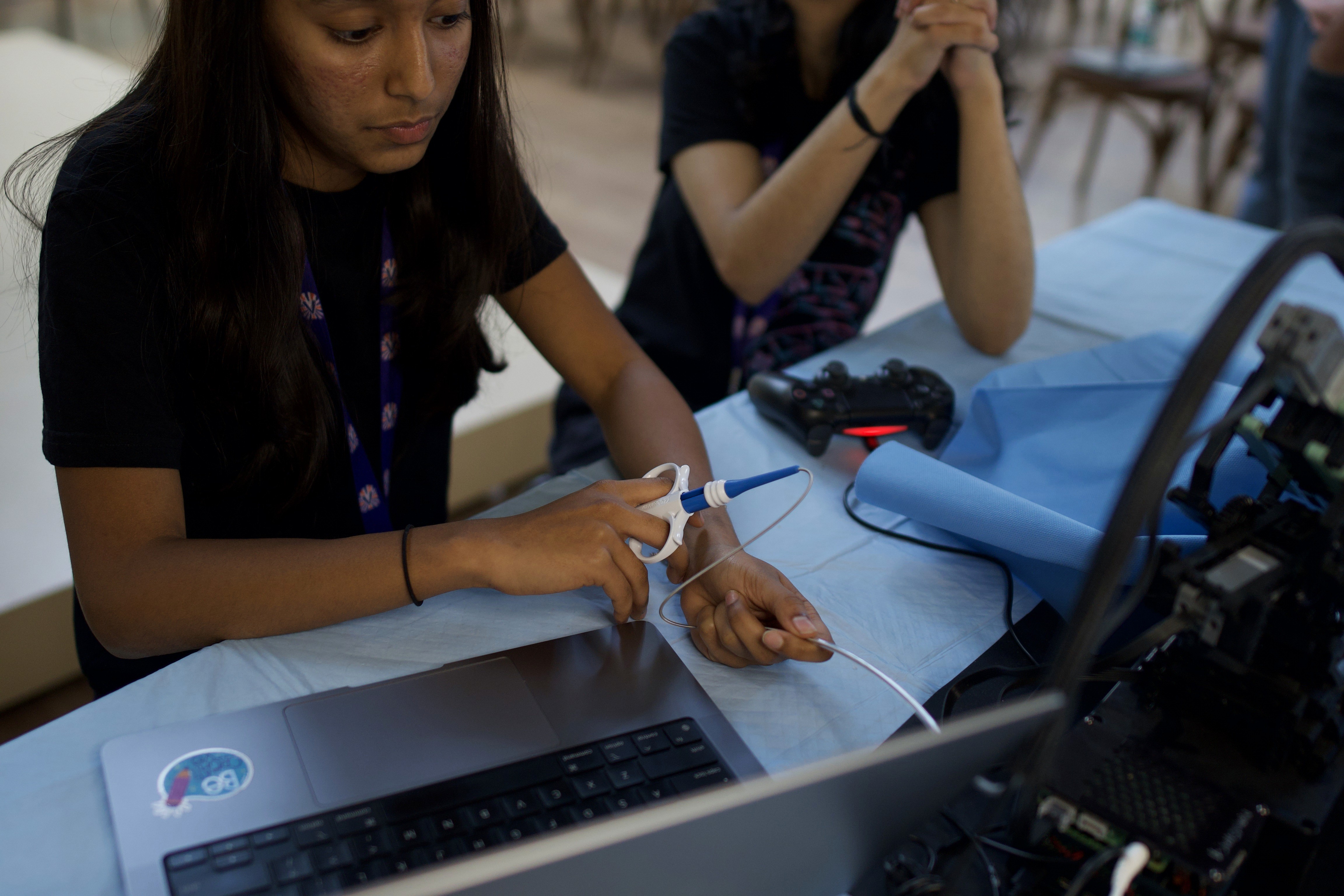
At Anandi, this is addressed through the Moonshot program, where students work directly with AI tools. They train models, use them in clinical simulation scenarios, and explain their decisions to domain experts, so the focus remains on understanding and application.
Why This Conversation Matters for Students & Parents
As per recent developments, it is safe to say artificial intelligence is already part of how students study, whether schools formally allow it or not. Many students use AI to explain concepts, check answers, or complete assignments. This creates a real responsibility for schools and parents. Ignoring it does not stop its use. Allowing it without guidance creates dependence.
Students must be taught to:
Use AI to support understanding, not replace effort
Check and verify what AI produces
Complete core thinking tasks on their own
The application of AI in education becomes useful only when students still develop their own reasoning alongside it.
The Opportunities - Benefits of AI in Education
For a long time, schools have worked within fixed constraints. One teacher teaches many students. One lesson moves at one pace. Some students keep up comfortably, some struggle quietly, and some lose interest because the class is not moving at the pace they need. This has never been a failure of teachers. It has been a limitation of structure.
Using AI in education allows schools to respond to individual learning needs more closely, while still keeping the teacher at the center of guidance and decision-making.
Personalized Learning Pathways (Adaptive to Each Student)
Every classroom includes students who learn at different speeds. Some understand a concept quickly. Others need more time and practice. In a traditional setting, it is difficult for a teacher to adjust continuously for everyone.
Here, AI-based practice systems can respond to student performance on an individualistic note. More support is provided where a student begins to struggle, instead of the same blocker going unnoticed. Students get the chance to work on the same concept again until they feel more confident.
Along with helping students who need more support, AI in education also allows stronger students to move forward at the same time. In most classrooms, these students spend time waiting while others are still building understanding. AI-supported practice makes it possible for them to continue to more challenging work instead of staying at the same level.
Automated Grading and Real-Time Feedback
Feedback plays an important role in how students improve. When corrections are made in their middle years, students often move on without fully understanding their mistakes.
Immediate feedback changes that experience. Work in mathematics, coding, and language practice can now be reviewed within seconds. Students see mistakes while the topic is still fresh and therefore they are able to develop a stronger foundation as correction are happening at the right time, not days later.
Teachers also benefit from this support:
Routine assessments can be reviewed more quickly
Progress tracking becomes easier to monitor
Reports and academic summaries can be prepared more efficiently
Teachers gain more time for discussion and individual attention
Predictive Analytics for Early Intervention
Teachers observe their students closely, but it is not always easy to notice patterns developing over long periods. Using AI in education allows schools to see trends in attendance, participation, and performance more clearly. These patterns can help identify students who may need additional support before problems become more serious.
Improved Accessibility for Students with Disabilities
Accessibility is not only about helping students learn better. It should ensure how they can participate in the learning process without being blocked by format, attention, or expression challenges.
Students with dyslexia may struggle to read standard text. Students with ADHD may understand the lesson but lose track during long instructions or written tasks. Students learning in a second language may know the answer but find it difficult to express it clearly.
In forward-thinking environments such as the best international curriculum school in whitefield bangalore, AI technology in education helps reduce these barriers by changing how students interact with the same lesson.
Using AI in education, schools can support students through:
Speech to text tools that help students with ADHD or writing difficulties capture their thoughts quickly
Text to speech support for students with dyslexia or reading fatigue
Breaking long instructions into smaller, manageable steps to help students with attention regulation
Translation support for students still building language fluency
Enhanced Teacher Efficiency (20+ Hours/Week Saved)
Teaching has never been limited to teaching. A teacher may spend one hour in class, but several more hours preparing worksheets, reviewing submissions, writing remarks, and documenting progress. This raises a difficult question for education.
If a teacher’s time is heavily consumed by preparation, how much remains for actual student thinking and guidance? AI technology in education is beginning to shift this balance by assisting with routine academic tasks.
The Risks - Disadvantages of AI in Education
Every shift in education solves one set of problems and creates another. AI is no different. While its capabilities are expanding, schools must also examine what is AI in education from a responsibility standpoint.
Data Privacy and Security Breaches
Schools now collect detailed academic, behavioral, and cognitive data. Using AI in education allows institutes to move data through digital platforms, many of which are operated by external companies. And the unfortunate part is, parents are most likely to be unaware of this fact.
India took an important step with the Digital Personal Data Protection Act, 2023. The law sets rules for children’s data. Educational institutes now must ask for parental consent, provide a clear purpose behind the usage of AI tools in question, and provide assurance o how the same sensitive data is being protected. This creates a sense of safety on paper. Daily school practice, however, shows that usage of AI is entering classrooms faster than awareness, and systems can fully keep up.
Transparency from schools strengthens this issue of mistrust. Schools must be able to clearly answer questions such as:
Where is student data stored?
Who has access to it?
How long is it retained?
Is it used to train external AI systems?
What happens to it when the student graduates?
Algorithmic Bias and Educational Inequality
AI systems rely on past student data to judge performance. Equal representation, however, is not always present in that data. Multilingual learners and students with different expression styles may be misunderstood.
A Stanford study in 2023 found that detectors flagged non-native English writing as “AI-generated” more than 60% of the time. Genuine work, therefore, faced unfair doubt.
Such scenarios bring about heavy concerns around the matter of fairness.
Schools must therefore treat AI as an assistive layer. Using AI in education without careful teacher involvement may lead to conclusions that do not fully represent the student’s true understanding.
Reduced Critical Thinking Development
This is something some of the best international curriculum schools in india believe - learning is not only about reaching the correct answer. It is about understanding how to arrive there. When students turn to automated systems too early, they may complete tasks without fully processing the reasoning behind them.
Struggle, reflection, and revision are essential parts of intellectual growth. Schools must ensure students continue to engage in these processes instead of depending entirely on technological assistance.
Academic Integrity and Plagiarism Concerns
Traditionally speaking, the practice of giving assignments was created by teachers with the expectation that students would complete their work on their own. Written submissions became an anchor for students to prove how well they have understood a topic.
That situation has now become more complicated.
AI tools allow students to produce complete answers very quickly. A written submission, therefore, may not always show the student’s actual level of understanding. Teachers cannot depend only on written work to judge learning in the same way as before.
Assessment practices are changing because of this. Classroom discussions, student explanations, and problem-solving in front of the teacher are receiving more attention. These methods help teachers see the student’s real thinking and confirm genuine learning.
Lack of Emotional Intelligence and Human Connection
Classroom learning has never been limited to books and lessons alone. Student behaviour, mood, and participation often tell teachers more than test scores. At the same time, patterns like silence, low participation, or unusual withdrawal can indicate that a student is facing some difficulty.
When teachers reach out for a small conversation after class, or even when they ask a simple question, the student begins to feel supported. Comfort and confidence usually improve through that personal interaction.
Now, technology can support practice and deliver the right educational module. Emotional understanding, however, comes from observation and trust, something data alone can’t provide. Such interactions are seen to be very pivotal for certain individuals.
The Future of AI in Education - What’s Coming?
Schools have traditionally separated learning from application.
Students studied concepts first, and only much later faced situations where those concepts had real consequences. That separation is now becoming harder to maintain.
AI is preparing students in an all-around way by making them test ideas, make decisions, and see outcomes while they are still learning. This is forcing education to look again at what experience means, when it should begin, and what role schools must continue to play.
Simulation environments will allow students to practice real-world decisions safely, learning consequences through experience instead of waiting for adulthood exposure.
Long term AI learning companions will track student progress, strengths, and gaps, helping adjust pace, practice, and reinforcing academic rigor continuously over years.
Fixed curriculum speed will not remain the same for everyone. Faster progress will happen in strong subjects, while difficult areas will receive more time. Learning pace, therefore, will depend more on student readiness than a fixed timetable.
How has Anandi School adopted AI in Education for Betterment?
Many schools are still deciding whether AI should be allowed, restricted, or ignored.
Anandi has taken a more deliberate route, guided by its core education philosophy, where tools are introduced only when they strengthen thinking and understanding. Instead of treating AI as a separate subject or a shortcut, it is placed inside real learning environments where students must use it with purpose.
Moonshot Program and Real World Application
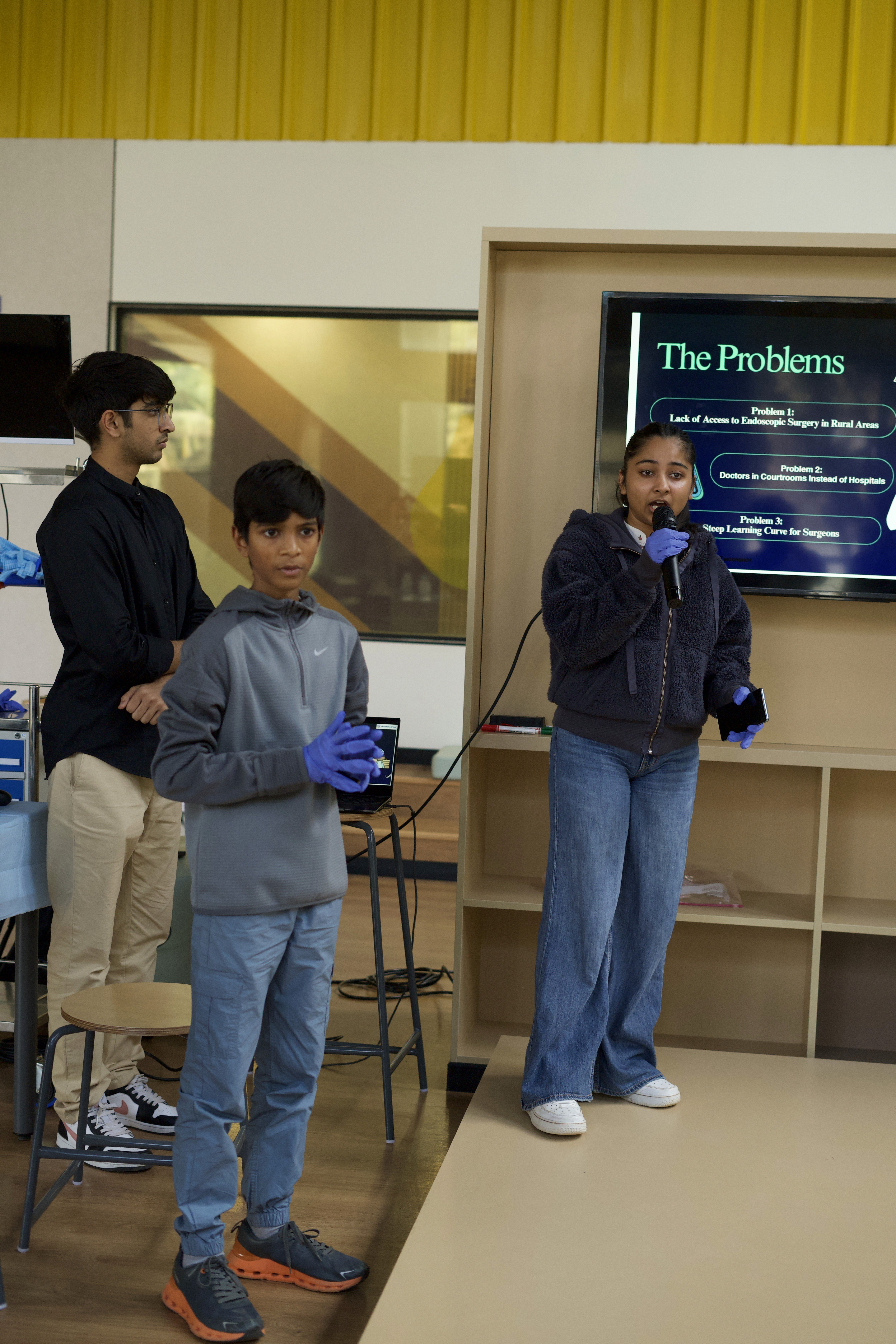
The Moonshot program, conducted in collaboration with the Harvard Medical School MEDscience team, places students inside real medical problem contexts. Students train computer vision models, study cancer diagnostics, and simulate clinical decisions. They are expected to understand why certain patterns matter before training the AI. And then in the final Shark Tank-style presentation phase, students are instructed to present their solutions to industry experts and defend their reasoning independently.
Thinking, Ethics, and Reflection
Anandi’s International Curriculum framework builds the habit of careful thinking in students. Information received through technology does not get accepted without review. Inquiry-based learning encourages students to question and check what they see.
Ethical use also becomes part of learning. Students are taught to consider consequences before using AI. Such introspection allows them to review their own decisions. And such conditioning of using AI for the correct purpose instills a student with responsibility and independent judgment.
The 4+1 Field Model and Mentor Guided Exposure
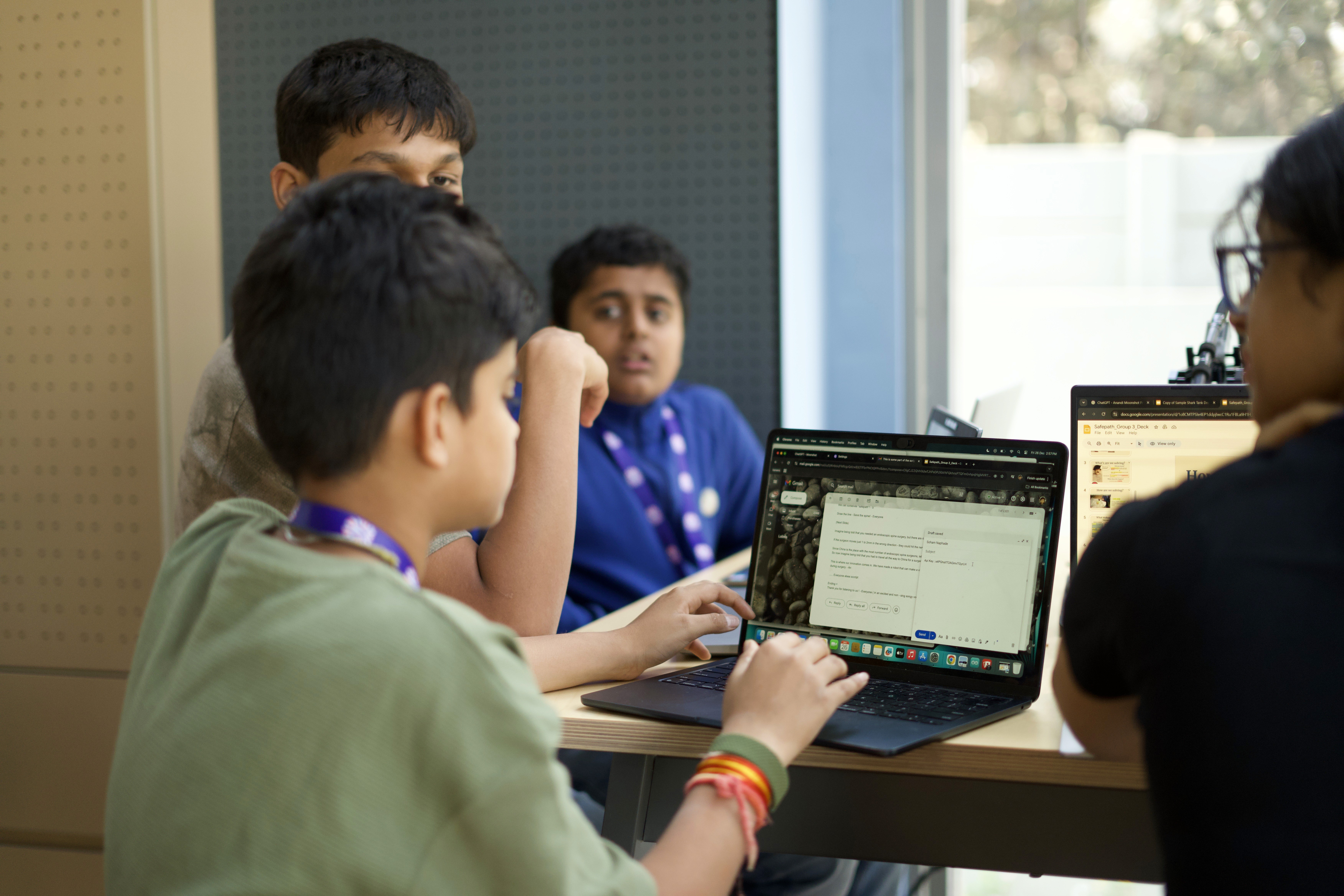
The 4+1 Field Model allows students to work within real disciplines such as business, medicine, and technology. Field mentors guide students through how decisions are actually made in these areas. AI becomes part of this process, helping students test ideas and explore solutions. This gives students early exposure to environments where technology and human judgment must work together.
FAQs
Q1. What is the main advantage of using AI in education?
Ans. AI gives students an additional way to practise and review lessons. Students can solve more questions and check where mistakes happened. Some students use it to understand topics again if they were not clear in class. Teachers can also see student progress more easily. Classroom teaching, however, remains the primary method of learning.
Q2. What is the disadvantage of AI in education?
Ans. Excessive use can reduce student effort. Students may rely on ready answers instead of attempting work themselves. Student data safety is another concern because some platforms store information. AI responses are not always correct. Teacher supervision is required to ensure proper use.
Q3. Who introduced AI in education?
Ans. AI in education developed over a long period. It was not introduced by one person. In the 1950s, B.F. Skinner created teaching machines that responded to student answers. Around 1960, the PLATO system provided computer-based lessons. Seymour Papert later introduced the LOGO programming language, which allowed students to learn using computers. After that, intelligent tutoring systems were developed to adjust questions based on student performance. Classroom use increased significantly after AI tools such as ChatGPT became available in 2022.
Q4. Can over-reliance on AI reduce critical thinking skills?
Ans. Independent problem-solving and critical thinking go hand-in-hand. Direct answers in such scenarios will always remove the concept of effort. And students will skip the same process if AI dependence is encouraged without a teacher’s guidance on independent thinking.
Q5. Does AI in classrooms damage the teacher-student relationship?
Ans. That is less likely to happen since the teacher-student relationship depends on the quality of teaching provided and regular interactions. AI at the given stage of development cannot bear the responsibility of explaining lessons, guiding students, and addressing their personalized concerns while maintaining that human connection.
Q6. What does responsible AI implementation in schools look like?
Ans. Responsible implementation includes teacher supervision and clear rules. Student data protection is necessary. Students must also learn the correct and incorrect use. AI is used as support, not a replacement.
Q7. Can AI systems be biased, and do these biases affect student outcomes?
Ans. AI systems depend on existing data. Incorrect evaluation can happen if the data does not represent all students equally. Teacher review helps correct such situations. Final decisions remain with teachers.