Every board leads to a different exam style, college path, and learning habit. Compare CBSE, ICSE, International Curriculum, Cambridge, NIOS, and state boards before you decide.
March 3, 2026
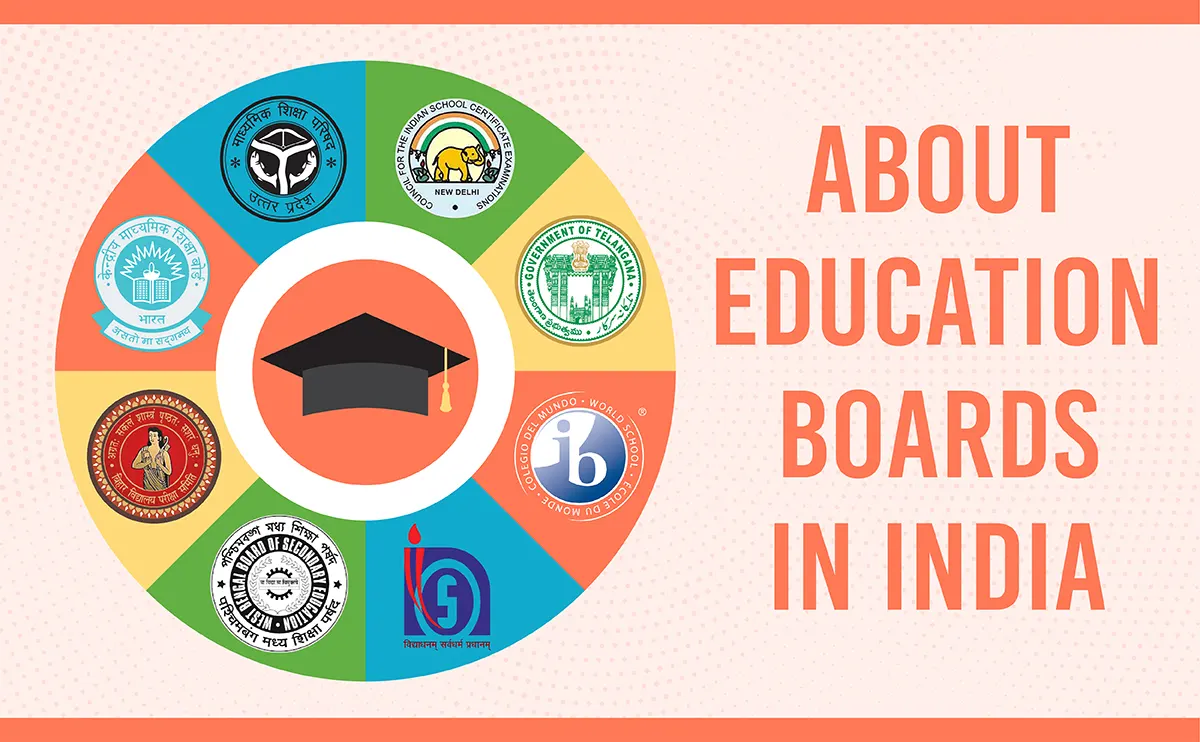
Education Boards in India
India is educating around 40.1 crore students, and their academic paths are shaped as much by family exposure, financial capacity, and social environment as by ability. In households with international exposure, the board is often chosen to prepare the child for foreign universities. In many state board households, the aim is to keep the child in a stable and affordable system that connects directly to nearby higher education.
Once a student enters a particular board, they continue learning, studying, and being evaluated within that same system for years. Because of this, students usually become familiar with certain entrance exams, evaluation styles, and college pathways that follow from that board.
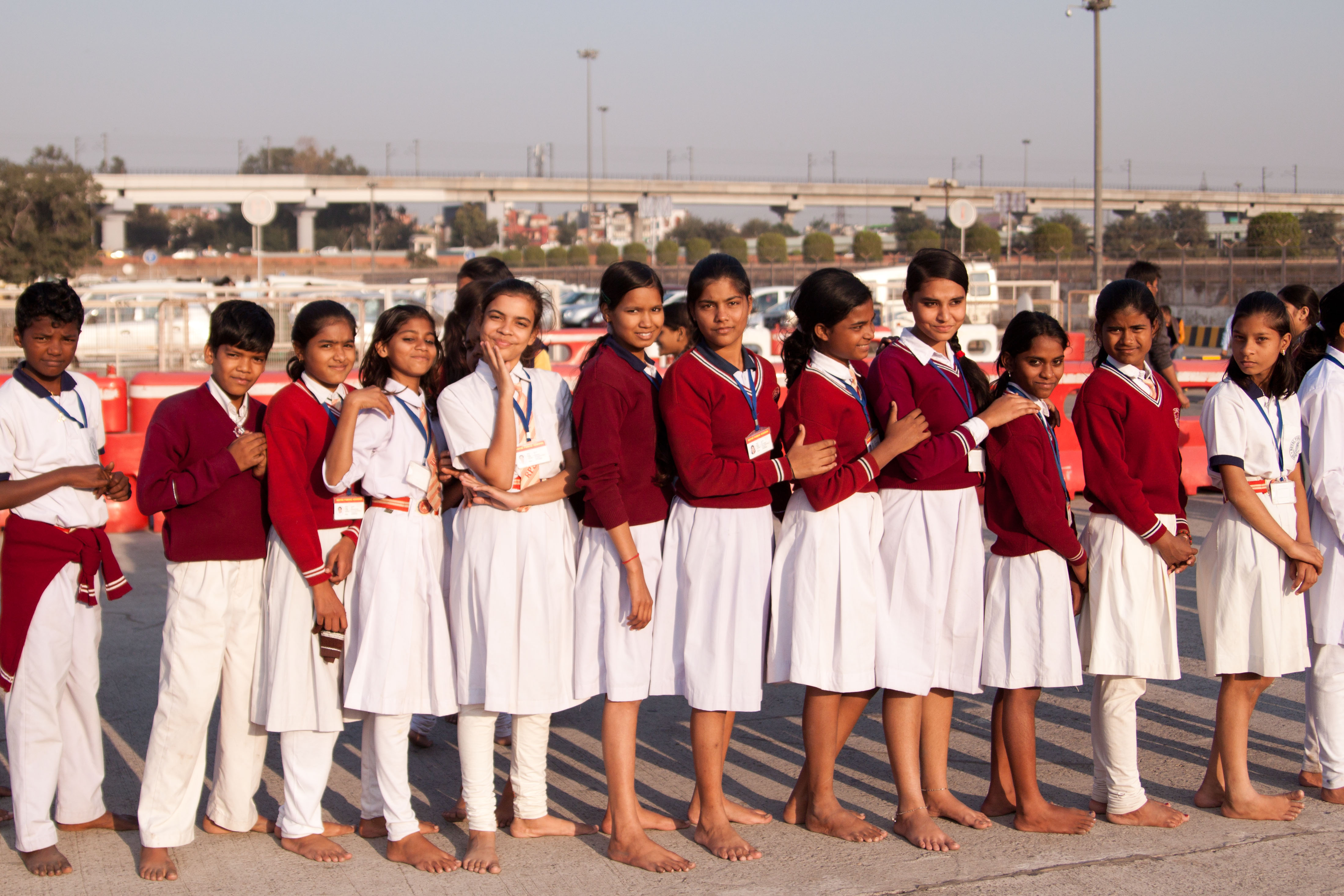
How Many Types of Education Boards in India?
Education boards in India are classified by where the academic authority sits. Central boards function at the national level, while state boards operate under state governments with their own academic control and policies.
Alongside them, international boards follow external academic frameworks and assessment systems. This creates three parallel schooling structures, separated by jurisdiction, curriculum ownership, and regulatory responsibility within the country.
Central Boards: CBSE, ICSE, and NIOS Explained
Central boards operate under national-level authority and provide a standardised academic framework that can be followed across different states and union territories.
CBSE and NIOS function under the Ministry of Education, Government of India. ICSE is administered by the Council for the Indian School Certificate Examinations, which operates as a private national academic body.
These boards were established to maintain academic uniformity across geographic regions and ensure that curriculum structure remains consistent under a central authority.
CBSE functions within the formal school system. ICSE operates through its own prescribed academic framework. NIOS provides structured education through open and flexible schooling formats.
State Boards in India: Top Examples from Maharashtra, UP, MP & More
State boards function under the authority of individual state governments and operate within their respective administrative boundaries. They were created to deliver education under state-level governance and align schooling with regional administrative systems. State boards function only within their respective states and provide education via state-affiliated schools.
The Maharashtra State Board, Uttar Pradesh Board, Madhya Pradesh Board, and Telangana Board operate under their respective state education departments and conduct academic certification within their jurisdictions. State boards provide instruction in regional languages alongside English, depending on state education policies.
International Boards: International Curriculum, CAIE/IGCSE and Their Growing Popularity
International boards entered India in response to globalization and the growing need for academic mobility beyond national borders. The board follows a flexible curriculum that prioritizes inquiry based learning, independent research, and concept application instead of rote memorization.
These boards are mainly concentrated in Tier 1 and metro cities such as Delhi, Mumbai, Bangalore, and Hyderabad, with specific clusters like Whitefield seeing a rise in international curriculum board schools in whitefield bangalore due to growing expat and tech communities.
Demand for international boards has increased steadily as globally mobile families seek education systems that prepare students for a global future from an early stage.
Top 10 Education Boards in India Ranked by Popularity & Recognition
A clear gap exists between education boards when measured by student numbers and school affiliations. Boards like CBSE and major state boards handle a very large share of academic certification every year, while boards like ICSE, International Curriculum, and Cambridge operate through a smaller set of schools.
This ranking lays out which boards currently hold the strongest presence within India’s active school system.
1. Central Board of Secondary Education CBSE Most Popular Choice
The Central Board of Secondary Education CBSE is the largest school board in India, with over 29000 affiliated schools. It is commonly chosen by middle-class families because of its national presence.
Its popularity is strongly linked to competitive exam preparation. Entrance exams such as JEE and NEET are conducted by the National Testing Agency and are primarily based on NCERT textbooks, which CBSE schools follow.
A student shifting from one city to another generally continues with the same curriculum and assessment pattern. Many students under CBSE aim for admission into institutions such as the Indian Institutes of Technology and the All India Institute of Medical Sciences, where entrance preparation aligns closely with the CBSE syllabus.
2. International Curriculum Global Standard
International Curriculum is mainly chosen by high net worth individuals and expatriate families targeting foreign universities for undergraduate studies. Its strength lies in its inquiry based academic model, which emphasises critical thinking, independent research, community service, and the Extended Essay.
In India, International Curriculum operates in the premium education segment, mostly in Tier 1 cities, with higher fees and specialised infrastructure, especially in hubs like Bangalore, where demand for an international curriculum board school in bangalore continues to grow. Its outcomes are globally visible. International Curriculum graduates have a high success rate in admissions to leading global institutions, including the ivy league and Oxbridge, and many International Curriculum schools follow anandi’s educational philosophy, which prioritises independent intellectual development.
3. Indian Certificate of Secondary Education ICSE CISCE
ICSE is conducted by the Council for the Indian School Certificate Examinations. Its syllabus is generally more detailed than CBSE, especially in subjects like English, history, and science. The board expects students to explain concepts properly, not just write short answers. There is a strong focus on understanding the subject and expressing it clearly in writing.
English is given significant importance, which helps students build strong language and communication skills over time. Parents who value in-depth learning, clarity of expression, and overall academic development often prefer ICSE, especially when their focus is broader than just entrance exam preparation.
4. Cambridge Assessment International Education CAIE IGCSE
This board gives children the flexibility to choose subjects based on their strengths and interests. A student can continue with science while also keeping subjects like economics, design, or psychology. The curriculum follows an international pattern and is accepted by universities across many countries. Parents who may be considering overseas education later often see this as a safe long-term option. It also has a structured exam system with clear grading, which suits families who prefer regular testing and defined outcomes rather than a largely project-based approach.
5. National Institute of Open Schooling NIOS
NIOS is useful when a regular school schedule does not fit a child’s life. This could be because the child is training in sports, working in the arts, managing health issues, or simply needs a slower and more flexible pace. Students can study from home and appear for exams when they feel prepared. For many parents, this becomes a supportive alternative instead of forcing a child into a system that is not working. The certification is recognised by the Government of India, which allows the child to move into higher education or skill-based pathways later.
6. Maharashtra State Board MSBSHSE
MSBSHSE is one of India’s largest state boards, handling millions of students every year, especially through its Junior College system. It dominates the Maharashtra academic ecosystem and directly feeds students into the state’s professional education sector. Its curriculum prepares students for state entrance exams such as MHT CET, which are required for admission into engineering and medical colleges within Maharashtra. However, its curriculum has historically had less alignment with NCERT compared to CBSE, which affects national entrance exam overlap.
7. Uttar Pradesh Board of Secondary Education UPBSE
UPBSE serves one of the largest student populations in the world, often conducting exams for more than 5 million students at once. It provides education across urban centres, rural areas, and remote villages, making it critical for mass academic access. It functions as the primary academic authority across North India and the Hindi heartland. Its structure is built for large scale standardised education delivery, ensuring certification across a massive population base.
8. Telangana State Board TSBIE
TSBIE is the key authority for Intermediate education in Telangana, which serves as the bridge between school and professional college admission. Its curriculum prepares students for state entrance exams such as EAPCET for engineering and medicine. The board has expanded rapidly alongside urban growth and educational demand in Hyderabad, which has become a major academic and technology centre. It plays a direct role in guiding students into regional professional higher education.
9. Madhya Pradesh Board MPBSE
MPBSE functions as the primary schooling authority across Central India, covering a large geographic area with diverse academic needs. It provides a unified curriculum across urban, rural, and tribal regions, ensuring academic continuity. Its system prepares students for state universities, administrative roles, and government career pathways. It plays a central role in maintaining structured education across the region.
10. Council for the Indian School Certificate Examinations CISCE Recap
CISCE is the governing body behind designing and conducting the ICSE (Class 10) and ISC (Class 12) examinations. Parents worldwide normally see this as board exams, on the news headlines.
The syllabus is detailed and places a strong focus on polishing language, writing skills, and conceptual understanding in theoretical subjects. Families who want their child to develop depth in studies and strong communication skills often consider this board, especially when they are thinking about higher education in India or abroad.
Which Education Board is the best in India? Detailed Comparisons
This comparison matters most when the student’s future direction is already visible. The difference affects exam readiness, learning style, relocation flexibility, and the kind of academic strengths the student develops over time. The table below shows how each system supports a different end goal.

Comparison Factor | Central Board CBSE | International Boards — International Curriculum and CAIE |
Primary Career Direction | • Based on the NCERT used in JEE and NEET | • Accepted by global universities |
How Students Learn | • Follows fixed textbooks | • Focus on research and inquiry |
Mobility Advantage | • Easy school transfer within India | • Accepted across countries |
Graduate Profile Developed | • Strong technical foundation | • Strong research skills |
Key Takeaways
CBSE is built around NCERT, which directly feeds into JEE, NEET, and CUET, making it the most aligned board for Indian competitive exam preparation.
International Curriculum and CAIE are designed for international university entry, where research work, internal assessments, and global evaluation standards matter more than textbook based exams.
State boards control the academic pipeline into state colleges, with their syllabus and entrance exams structured around regional higher education systems.
NIOS exists for students who cannot attend regular school, allowing flexible study and recognised certification without requiring daily classroom attendance.
Conclusion
This decision doesn’t feel like a big deal at first, but it slowly becomes one. Once a child gets into a board, the way they study, the exams they prepare for, even the options they see later, all start falling into that same line.
Some families care a lot about Indian exams, which is a system they understand well. There are also those that think a bit ahead, especially if studying abroad is on the table. That’s usually when people begin looking into things best international curriculum board schools in India, just to see how different that path really is.
The best education board in India for your child comes down to what works for them and where you see things going from that starting point.
FAQs
Q1. Which education board in India should I prefer if I want to pursue higher studies abroad?
Ans. International Curriculum and Cambridge prepare students differently from the Indian boards. Students get used to writing research papers, citing sources, and presenting their thinking. Foreign universities like the ones in the US, UK, and Europe expect that level of academic independence from the beginning
Q2. How many educational boards are there in India?
Ans. Looking from a broad level, there are three groups. National boards like CBSE and ICSE, state boards run by individual states, and international boards such as International Curriculum and Cambridge.
Q3. Which are the international boards in India?
Ans. International Curriculum and Cambridge are the ones you will see most often. Cambridge runs IGCSE and A Levels. Both follow academic systems used in schools outside India.
Q4. Which board of education is better to get admitted into the Ivy League universities?
Ans. International Curriculum has an advantage here. Students complete long-form academic work before graduation, so universities already know they can handle reading heavy and writing intensive courses.
Q5. Which is the most popular education board in India?
Ans. CBSE is followed by the largest number of schools. It also connects closely with entrance exams like JEE and NEET, which keeps it widely chosen.
Q6. Which is the toughest board in India?
Ans. ICSE demands more detailed answers. Students cannot rely on short responses. They are expected to explain properly, especially in English and theory-based subjects.